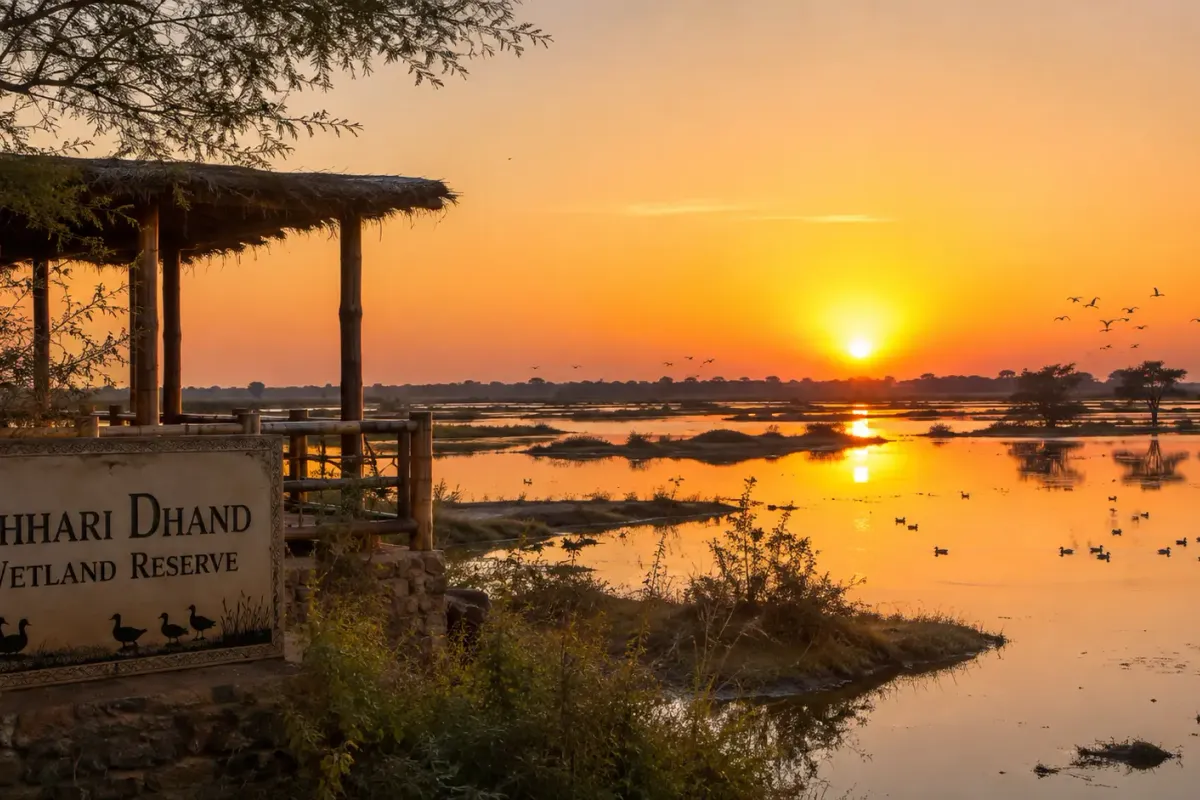
When Hamirsar Lake genuinely overflows during a good monsoon, the city of Bhuj declares a public holiday the next day and distributes sweets called Meghladoos in celebration. Hamirsar lake is more than just a scenic evening stop it's a 450-year-old engineering achievement that once kept an entire desert capital alive. This guide covers the real history, honest boating logistics, and exactly what to do here on your Bhuj visit.
HISTORY OF HAMIRSAR LAKE
Hamirsar lake bhuj began as a small pond called Hamirai, on a site chosen for a genuinely specific geological reason: it sat within one of Kutch's only Cretaceous sandstone belts, one of the few places in this saline, arid region where rainwater could be stored without turning brackish. When Rao Khengarji I made Bhuj the capital of Kutch in 1549 CE, he enlarged this pond into a proper reservoir spanning roughly 28 acres, naming it after his father, Rao Hamir (1472-1524), the founder of Bhuj itself.
What makes this genuinely remarkable isn't just the lake's age it's the engineering behind it. Canals and tunnels were built to channel water from three separate river tributaries into the lake, recharging the groundwater beneath Bhuj in a landscape where deeper water sources ran naturally saline. The lake's embankment was constructed later, during the reign of Pragmalji II, with further improvements under Khengarji III, and the actual construction work was carried out by the Mistris of Kutch, a local community of skilled masons whose craftsmanship shaped much of historic Bhuj. In 2022, on India's 75th independence anniversary, the Jal Shakti Ministry formally recognised Hamirsar as one of 75 sites representing India's water heritage.
THE AAGMAN FESTIVAL: WHEN THE LAKE OVERFLOWS
This is the detail most places to visit in bhuj content leaves out entirely, and it's genuinely one of the most charming local traditions in the city. When Hamirsar fills enough during monsoon to overflow, Bhuj celebrates with a tradition known locally as Aagman a custom reportedly dating back to the era of the region's ancient monarchs. Sweets called Meghladoos are distributed throughout the city, and the following day is declared an official public holiday.
It's a genuinely rare kind of civic celebration, tied directly to a specific hydrological event rather than a fixed calendar date, and it says something real about how central this lake remains to Bhuj's identity even centuries after it was built.
"Kutch Nahi Dekha To Kuch Nahi Dekha if you haven't seen Kutch, you haven't seen anything."
— Traditional Gujarati saying
HAMIRSAR LAKE TIMINGS AND BOATING
The lake itself is accessible throughout the day, with early morning and evening being the most pleasant times to visit given Bhuj's daytime heat for much of the year. Hamirsar lake boating exists, but it's worth being honest about this rather than overselling it available sources describe boating as an occasional activity rather than a consistently operating, ticketed attraction. Don't build your visit specifically around guaranteed boat access; treat it as a pleasant possibility rather than a certainty, and confirm current availability locally if it matters to your plans.
What's far more reliable is the lake's role as Bhuj's central evening gathering spot locals walk the banks daily, and the surrounding promenade offers genuinely pleasant, unhurried city-life atmosphere that contrasts nicely with a day spent sightseeing at the desert or the Rann.
Planning Your Kutch Trip?
Contact our travel experts for personalized assistance and custom itineraries.
THINGS TO DO AT HAMIRSAR LAKE
Bhuj lake activities centre on a relaxed pace rather than structured attractions. Evening walks along the banks are the most popular activity, drawing both residents and visitors, especially as the light softens toward sunset. Birdwatching is genuinely worthwhile too the lake occasionally draws flamingos and other water birds, a smaller-scale preview of the birdlife you'll see in greater numbers at Chhari Dhand or the Banni Grasslands if your itinerary includes those.
Hamirsar sits within easy walking distance of Bhuj's other major heritage sites, making it a natural pairing rather than a separate destination. Combine your visit with Aina Mahal and Prag Mahal, both covered in our bhuj tourist places guide, for a full half-day Bhuj heritage circuit that ends at the lake for a relaxed evening.
BEST TIME TO VISIT HAMIRSAR LAKE
October through March offers the most comfortable conditions, avoiding both Kutch's punishing summer heat and, ironically, the exact monsoon overflow period that triggers the Aagman celebration if witnessing that specific event interests you, you'd need to time a visit around an active monsoon year instead, which isn't predictable season to season.
COST OF VISITING HAMIRSAR LAKE
Here's a realistic cost breakdown for a Hamirsar Lake visit, per person.
Category | Budget | Mid-Range | Luxury Entry | Free | Free | Free Boating (if available at time of visit) | ₹50-100 | ₹100-200 | N/A informal, not a fixed luxury tier Local transport from elsewhere in Bhuj | ₹50-100 (auto-rickshaw) | ₹300-500 (private cab, short trip) | ₹1,500-2,500 (private cab, full Bhuj day) Combined with Aina Mahal/Prag Mahal visit (entry fees) | ₹40-100 | ₹40-100 | ₹40-100
Prices as of Month 5 (December 2026), built from typical Bhuj local transport costs and occasional boating fee reports verify current availability and pricing locally, since boating specifically isn't a guaranteed, fixed-schedule attraction.
9 PRACTICAL TIPS FOR VISITING HAMIRSAR LAKE
1. Don't plan your visit specifically around boating being available treat it as an occasional bonus rather than a guaranteed activity.
2. Visit in the evening for the most pleasant atmosphere and the best light for photography.
3. Combine your stop with Aina Mahal and Prag Mahal, both within easy reach, for a fuller Bhuj heritage half-day.
4. Ask locally about the Aagman tradition if you're visiting during or just after a strong monsoon you may catch the city celebrating a lake overflow.
5. Bring binoculars if you're interested in casual birdwatching, though don't expect the scale of a dedicated sanctuary like Chhari Dhand.
6. Wear comfortable walking shoes for the lakeside promenade, which is genuinely more of a walking destination than a sit-and-view spot.
7. Visit October through March for the most comfortable weather, since Bhuj's summer heat makes an unhurried lakeside walk considerably less pleasant.
8. Carry small cash for any informal boating or vendor stalls, since card payment isn't reliably available at this kind of local, low-key attraction.
9. Treat Hamirsar as a genuine break from sightseeing rather than another checklist stop its real value is the unhurried pace, not a packed activity list.
FREQUENTLY ASKED QUESTIONS
What is Hamirsar Lake famous for? A 450-year-old artificial lake in central Bhuj, built during Rao Khengarji I's reign and named after his father, Rao Hamir. It's known both as a historic rainwater management system and for the Aagman tradition, where the city celebrates when the lake overflows during monsoon.
Is boating available at Hamirsar Lake? Occasionally, but it isn't a consistently operating, guaranteed attraction. Confirm current availability locally rather than planning your visit specifically around it.
How old is Hamirsar Lake? Approximately 450 years old, built during the reign of Rao Khengarji I (1548-1585), when Bhuj became the capital of Kutch in 1549 CE.
Was Hamirsar Lake damaged in the 2001 earthquake? Yes, though it had already lost much of its catchment area and recharge capacity before the earthquake due to urban expansion. The water system was restored by 2003 through community and municipal effort.
What is the Aagman festival at Hamirsar Lake? A local tradition marking the lake's overflow during a strong monsoon, when the city distributes sweets called Meghladoos and declares the following day a public holiday.
What is the best time to visit Hamirsar Lake? October through March, for the most comfortable weather. Evening visits offer the most pleasant atmosphere and the best light for photography.
Can I combine Hamirsar Lake with other Bhuj attractions? Yes, easily. It sits within easy reach of Aina Mahal and Prag Mahal, making a natural half-day heritage circuit ending with a relaxed evening at the lake.
FINAL VERDICT: IS HAMIRSAR LAKE WORTH VISITING?
Yes, particularly as an evening stop after a day of Bhuj sightseeing rather than a dedicated destination in its own right. The history here is genuinely significant a 450-year-old water management system that kept an entire desert capital alive, recently recognised as part of India's official water heritage and the Aagman tradition adds a layer of living culture most visitors never hear about.
Don't build your trip around guaranteed boating, since that's genuinely inconsistent, and don't expect a major standalone attraction on the scale of Bhuj's palaces. Come for an unhurried walk, some context on Kutch's remarkable water engineering history, and a relaxed way to close out a heritage-focused day in the city.
About the author: This guide was compiled by the IVARA Journeys travel team, who curate premium and pilgrimage travel packages across Gujarat, including Bhuj city heritage circuit planning. Last visited Kutch: December 2026.
Ready to add Hamirsar Lake to your Bhuj day? Talk to our Kutch travel expert (/contact) or explore our Rann Utsav packages (/packages/rann-utsav-kutch) and for the complete list of Bhuj's other heritage sites, our bhuj tourist places and kutch tourism guides help you plan the rest of your visit, alongside our lakhpat fort guide if you're extending into western Kutch.
Ready to Experience This?