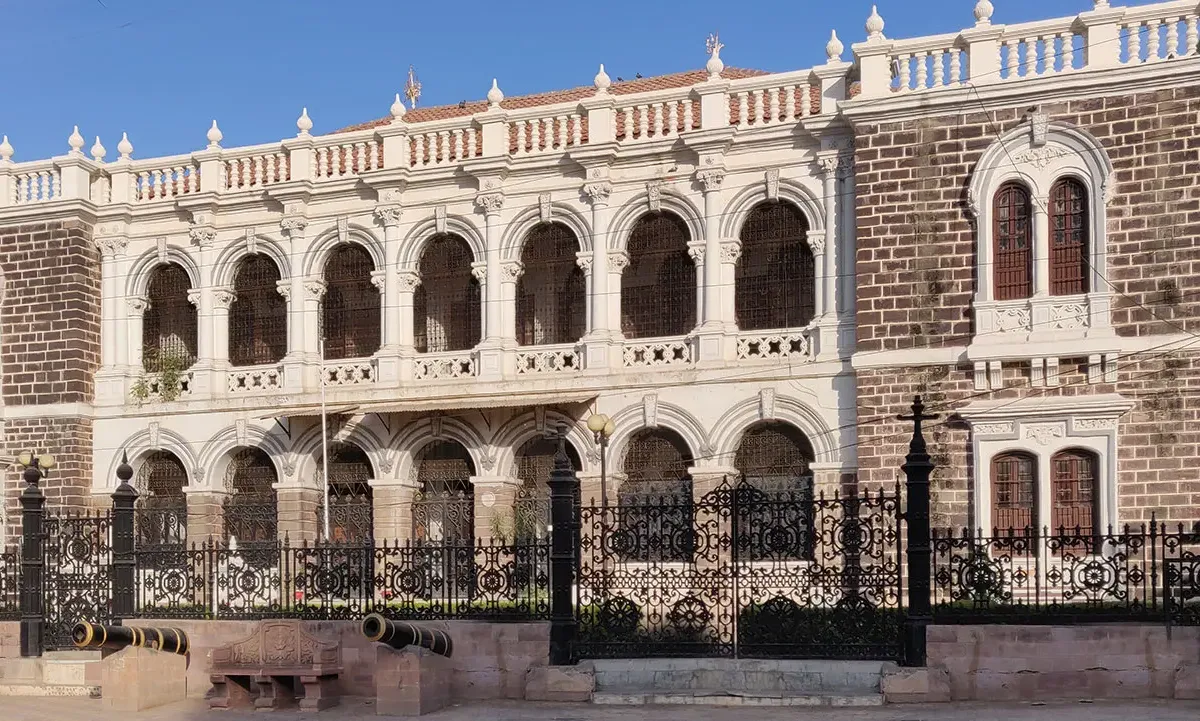
Kutch museum gets called "India's oldest museum" across a surprising amount of travel content online, and it simply isn't true that title belongs to Kolkata's Indian Museum, founded in 1814, more than six decades before Kutch Museum opened. What Kutch Museum genuinely is: Gujarat's oldest museum, founded in 1877, home to the largest existing collection of Kshatrapa inscriptions anywhere. This guide covers the real history, the honest timings, and exactly what's inside.
HISTORY OF KUTCH MUSEUM: GUJARAT'S OLDEST, NOT INDIA'S
Kutch museum bhuj began life as part of a School of Arts, formally becoming a museum on 1 July 1877 under Maharao Sir Khengarji III of the Kutch State. Its earliest collection was genuinely personal the wedding gifts Khengarji III received on his marriage, rather than a deliberately assembled archaeological collection. The present building's foundation stone was laid separately in 1884 by Sir James Fergusson, then Governor of Bombay, which is why the museum was originally known as the Fergusson Museum before its name changed.
The building itself was designed by state engineer Mc Leland in Italian Gothic style, and constructed by the Mistris of Kutch the same skilled mason community responsible for Hamirsar Lake's embankment nearby. For decades, the museum remained genuinely private, shown only to the King and his chosen guests; it opened to the general public only after Indian independence. Every credible source describing this museum Gujarat Tourism's own site included calls it Gujarat's oldest museum specifically, not India's, a distinction worth getting right if you're researching before your visit.
WHAT YOU'LL SEE: COLLECTIONS AND GALLERIES
Museum in kutch content rarely goes deep on what's actually inside, beyond the standard "textiles and artefacts" summary. The two-storey building houses 11 distinct galleries covering archaeology, anthropology, textiles, numismatics, taxidermy, weapons and a dedicated picture gallery, alongside a section devoted specifically to Kutch's tribal communities and their crafts.
The single most significant holding is the museum's collection of Kshatrapa inscriptions dating to the 1st century AD the largest existing collection anywhere alongside rare surviving examples of the extinct Kutchi script, a writing system that no longer exists in active use. The numismatics gallery includes examples of the kori, Kutch's own historical local currency. On the ground floor, don't miss Airavat a striking, seven-tusked white elephant sculpture, painted in Kamangiri style with flowers and creepers, an 18th-century masterpiece originally crafted in Mandvi and tied to the Hindu deity Indra's mythological mount.
Gallery Focus | What's Notable Kshatrapa inscriptions | Largest existing collection anywhere, 1st century AD Extinct Kutchi script | Rare surviving written examples of a script no longer in use Numismatics | Kori coins, Kutch's historical local currency Ground floor centrepiece | Airavat, 18th-century seven-tusked elephant sculpture from Mandvi Tribal culture section | Crafts and artefacts of Kutch's indigenous communities
"Kutch Nahi Dekha To Kuch Nahi Dekha if you haven't seen Kutch, you haven't seen anything."
— Traditional Gujarati saying
KUTCH MUSEUM TIMINGS AND ENTRY FEE
Kutch museum timings run approximately 10:00 AM to 1:00 PM and 2:30 PM to 6:00 PM, though sources genuinely differ slightly on the exact afternoon closing time and closure days one source specifies Wednesday closures only, another adds the museum also closes on the 2nd and 4th Saturdays of each month plus public holidays. Confirm the current schedule locally rather than assuming either version with certainty, particularly if you're planning around a specific Saturday.
Entry fee is more consistent across sources: roughly ₹5 for Indian visitors and ₹50 for foreign visitors, with a separate camera fee of around ₹100 reported by at least one source. Budget 1 to 1.5 hours for a proper visit enough time to actually read the Kshatrapa inscription displays rather than walking past them.
Planning Your Kutch Trip?
Contact our travel experts for personalized assistance and custom itineraries.
HOW TO REACH AND COMBINE YOUR VISIT
The museum sits opposite Hamirsar Lake, less than a kilometre from central Bhuj and roughly 4 km from Bhuj Railway Station genuinely easy to reach on foot if you're already exploring the city centre. It pairs naturally with Aina Mahal and Prag Mahal, both a short distance away, making a combined Bhuj heritage circuit genuinely efficient to complete in a single morning or afternoon.
If your Kutch trip extends further afield, the museum's Kshatrapa and historical context adds genuine depth to sites like dholavira, where you'll see a much older, pre-historic layer of the same region's story worth visiting both if archaeology and history interest you beyond a single stop.
COST OF VISITING KUTCH MUSEUM
Here's a realistic cost breakdown for a Kutch Museum visit, per person.
Category | Budget | Mid-Range | Luxury Entry fee (Indian visitor) | ₹5 | ₹5 | ₹5 Camera fee | ₹100 | ₹100 | ₹100 (often waived on guided tours) Local transport from elsewhere in Bhuj | ₹50-100 (auto-rickshaw) | ₹300-500 (private cab, short trip) | ₹1,500-2,500 (private cab, full Bhuj day) Guide (optional) | N/A | ₹300-500 | ₹800-1,200 (private guide)
Prices as of Month 5 (December 2026), built from current visitor-reported fees verify current rates and Saturday closure schedule locally before visiting, given the minor variation across sources.
9 PRACTICAL TIPS FOR VISITING KUTCH MUSEUM
1. Confirm the current closure schedule locally, since sources disagree on whether the museum also closes on the 2nd and 4th Saturdays in addition to Wednesdays.
2. Budget 1 to 1.5 hours for a proper visit rather than rushing through in 20 minutes.
3. Combine your visit with Aina Mahal and Prag Mahal, both within easy walking distance, for a fuller Bhuj heritage morning.
4. Don't skip the Kshatrapa inscription gallery specifically it's the single most historically significant collection in the museum.
5. Look for the extinct Kutchi script examples, a genuinely rare thing to see displayed anywhere.
6. Carry small cash for the entry and camera fees; card payment isn't reliably available at smaller heritage sites like this.
7. Visit in the morning session if you're combining it with an afternoon at Hamirsar Lake or the palaces.
8. Ask a guide about the Airavat sculpture's Kamangiri painting style specifically, since it's a genuinely distinctive craft technique most visitors walk past without context.
9. Photography restrictions may apply in certain galleries even with the camera fee paid check with staff before assuming full access.
FREQUENTLY ASKED QUESTIONS
Is Kutch Museum India's oldest museum? No. It's Gujarat's oldest museum, founded in 1877. India's actual oldest museum is the Indian Museum in Kolkata, founded in 1814, well before Kutch Museum existed.
What are the Kutch Museum timings? Approximately 10:00 AM to 1:00 PM and 2:30 PM to 6:00 PM, closed Wednesdays, with some sources also citing closures on the 2nd and 4th Saturdays. Confirm locally before visiting.
What is the Kutch Museum entry fee? Roughly ₹5 for Indian visitors and ₹50 for foreign visitors, with an additional camera fee of around ₹100 reported by some sources.
What is Kutch Museum famous for? Its collection of Kshatrapa inscriptions from the 1st century AD, the largest existing collection anywhere, alongside rare examples of the extinct Kutchi script and the striking Airavat elephant sculpture.
How far is Kutch Museum from Bhuj Railway Station? Roughly 4 km, and the museum itself sits less than a kilometre from central Bhuj, opposite Hamirsar Lake.
How much time do I need for Kutch Museum? 1 to 1.5 hours for a proper visit that includes reading the Kshatrapa inscription displays rather than a rushed walk-through.
FINAL VERDICT: IS KUTCH MUSEUM WORTH VISITING?
Yes, particularly if you're already exploring Bhuj's heritage circuit around Aina Mahal and Prag Mahal the museum's Kshatrapa inscription collection and extinct-script displays add genuine historical depth that the palaces alone don't cover. Just go in knowing it's Gujarat's oldest museum, not India's, so you're not disappointed by scale expectations set by an inaccurate superlative.
It's a worthwhile hour and a half rather than a must-see standalone destination combine it naturally with your other Bhuj city stops rather than making a dedicated separate trip just for the museum itself.
About the author: This guide was compiled by the IVARA Journeys travel team, who curate premium and pilgrimage travel packages across Gujarat, including Bhuj city heritage circuit planning. Last visited Kutch: December 2026.
Ready to add Kutch Museum to your Bhuj day? Talk to our Kutch travel expert (/contact) or explore our Rann Utsav packages (/packages/rann-utsav-kutch) and for more of Kutch's heritage sites, our white rann of kutch, dholavira and vijay vilas palace guides round out the historical picture.
Ready to Experience This?